

ABSTRACT
A review by Carr and Fox concluded that, in today’s multimedia culture, “the use of video technology” is a “vital component” for disseminating health communication interventions. And, “in fact, some users may find the lack of video…aversive.”1

DISSEMINATING HEALTH COMMUNICATION INTERVENTIONS
An editorial by Rimal and Lapinski stated “health communication is seen to have relevance for virtually every aspect of health and well-being, including disease prevention, health promotion and quality of life.”2
However, they warn that because of “rapidly changing communication channels” campaigners must “think carefully about the channels through which intervention messages are disseminated,” with the need to take “extra effort to meet their audiences.”
From “posters in community facilities, placed radio spots, and distributed brochures…[to] showing videos, small group presentations, and school work” there are a dearth of dissemination methods to influence, facilitate, or promote behaviour change.3
VIDEO CAMPAIGNS VS. OTHER MEDIA CHANNELS
Shen, Sheer and Li conducted a meta-analysis which investigated 25 different health intervention campaigns, in an effort to measure how persuasive each campaign had been in prompting “changes in attitudes, intentions, and behaviours.”4
Paying close attention to the media channels that had been utilised for dissemination, the meta-analysis reach the conclusion that, not only did “narratives delivered via audio and video produce significant effects,” but, said effects were superior to print-based narratives, which “did not exhibit a significant impact.”
Indeed, Carr and Fox found that “printed content [being] the most common media selected” has led a majority of campaigns to be “ineffectively disseminated.”5

VIDEO-BASED INTERVENTIONS: A CASE STUDY
A case study by Cohen et al. sought to understand the media channels or strategies that should be used to effectively disseminate heath communication interventions. The study found that “secondary dissemination of successful interventions is crucial to improving health and disease prevention outcomes.”6
However, it found that successful dissemination faces a multitude of challenges, most being attributed to the “limited” understanding of which media platform to use for implementation.
To reach a conclusion, the case study focused on the message design from the successful 1-2-3 Pap video-based health intervention, which was “built through extensive research and partnerships with community members” and funded by the Centres for Disease Control.7
1-2-3 Pap sought to alter the negative “knowledge, attitudes… and barriers to both Pap testing and HPV vaccination” among a vulnerable, underserved demographic that were “significantly less likely than their urban counterparts to receive” the first dose of the vaccine, let alone follow through with the remaining two.
To do so, researchers designed a 13-minute video “which consisted of messages about the importance of HPV vaccination and Pap testing” delivered by members of the community.
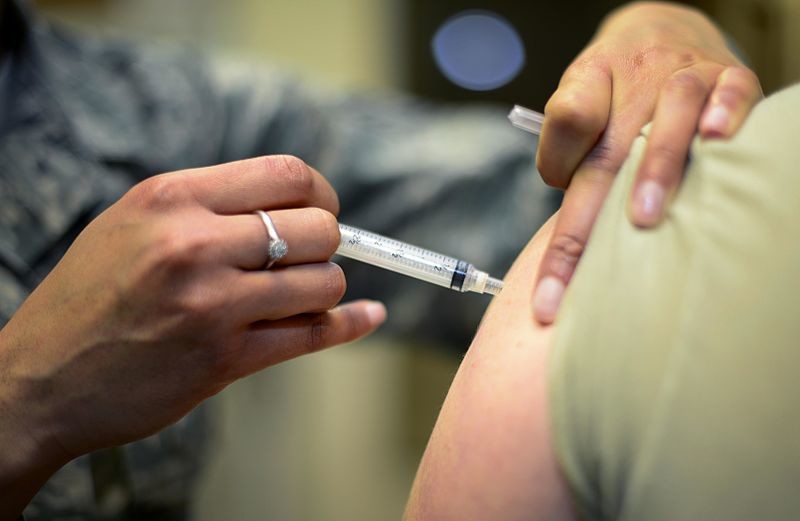
The findings indicated that “the intervention was effective in improving vaccine adherence” as “women assigned to the ‘1-2-3 Pap’ intervention were almost 2.5 times more likely…to complete the HPV vaccine series.”
HEALTH COMMUNICATION INTERVENTIONS: A HOW-TO GUIDE
The Centres for Disease Control and Prevention has outlined 6 steps toward successfully implementing a health communication intervention designed to influence, facilitate, or promote behaviour change8. Here are the key takeaways:
1. Assemble a Team
It is vital to choose staff “whose combined experience ensures that the necessary technical, managerial, and creative contributions will be made.” A consensus exists that this is more easily achieved by outsourcing to a dedicated, full-time third-party agency9.
2. Identify Objectives
From the beginning, a campaign should be formulated with “an outcome objective” in mind that “quantifies the desired behaviour change.” For the outcome objective, specify: Who will be affected? What will change? How much change will occur? By when?
3. Create A Program Plan Per Channel
There exists a multitude of media platforms for disseminating interventions, however, an increased preference has been show toward video-based approaches10.
4. Describe the Benefits
Marketing is based on the “Principle of Exchange,” the idea that “people will bear certain costs to get something of value in return.” An intervention should offer its audience an exchange that: “Is easy and irresistible to accept; Maximizes the benefits they will get for adopting a behaviour; Minimizes any barriers that might deter them.”
5. Develop a Timeline
“Working backward from your outcome objectives, develop a timeline that covers all phases of each intervention” in order to track its performance.
6. Account for Budgeting
“Budgets should be built on the basis of the activities and materials necessary for the interventions. Keep your objectives in mind as you decided whether the costs of specific activities are justified.”